I wrote about turbulence a year ago. I’m still not comfortable when it happens.
I think about turbulence around this time of year because our family takes an annual trip that involves being in the sky for over 20 hours. One way.
Like I did a year ago, I’m going to continue talking about turbulence as a metaphor for things being out of control.
Usually, when things are out of control, it’s easy for us to feel like we have no choice in the matter. We just have to let it happen. We have to ride it out.
It turns out that when flying through turbulence at least, that’s not entirely true.
If it’s not true for turbulence, perhaps it’s not true for other times either.
**
Let’s get technical about turbulence.
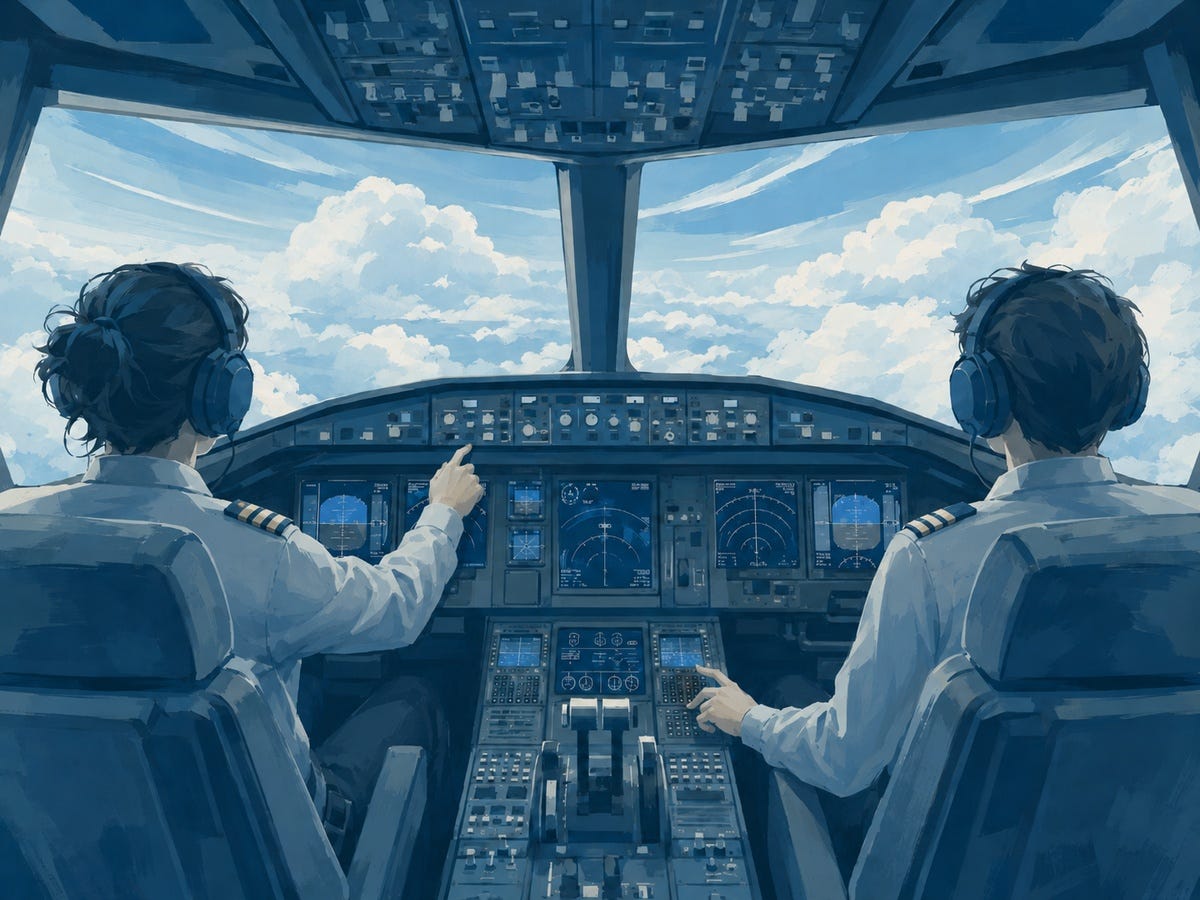
Last year, I had the incredible privilege to sit in a cockpit during a flight. Two flights actually.
My Dad was the Captain, and it was his final set of flights before retiring from a 40+ year career in aviation.
When you sit in a cockpit, you get an entirely different perspective on turbulence.
You’re able to see what the pilots actually do during it.
I noticed three things, the first happens before you ever experience turbulence.
The cockpit has a radar, and the range on that radar can extend quite far.
This means that in some cases, pilots can see the turbulence coming.
Depending on their read of the severity of it, they may request a deviation. Meaning, they ask for clearance from air traffic control to deviate off their planned flight path by a few degrees or several, depending on what they see.
The second thing pilots might do is slow the plane down.
There’s something called turbulence penetration speed, and while that is unique to every aircraft, the actual number is something that pilots can go to if they have to.
The final thing, is height. Depending on when during the flight the turbulence happens, pilots might ascend or descend to get to calmer air.
**
The coolest thing about flying these days, is that you don’t have to sit in a cockpit to see everything I just described. You can see it from your seat.
Somewhere in your in-flight entertainment system, there will be a way to view the progress of your flight. In that area, there is a cockpit view option—this only becomes available once you’re higher than 10,000 feet.
If you happen to find that, then during turbulence you will be able to see exactly what the pilots are doing. That view will show you the speed, direction (referred to as “heading”), and the height of the aircraft. When the pilots make changes, you’ll see them as they happen.
I visit this screen each time the seatbelt sign comes on.
**
So what are our choices when things are out of control?
Let’s look at those three things that pilots do:
Change direction - We can choose to focus our attention elsewhere for a little while.
Slow down - While this is self-explanatory, don’t you find it fascinating that the lesson that’s true for us is also true for a giant metal object hurtling through the sky?
Change height - This feels like zooming out or zooming in. We can zero in on one part of what’s out of control and try to get that in control, or we can zoom out and get some perspective on how out of control this really is.
**
There have been a few times when I’ve switched over to the cockpit view during turbulence and noticed ... nothing.
No directional change, no speed change, and the aircraft staying at the same height.
In some cases, when things feel out of control, we do just have to let it happen.
We have to ride it out.