


In the late 1940s, the founder of Rolex started creating a line of watches that were less expensive than other models of the time.
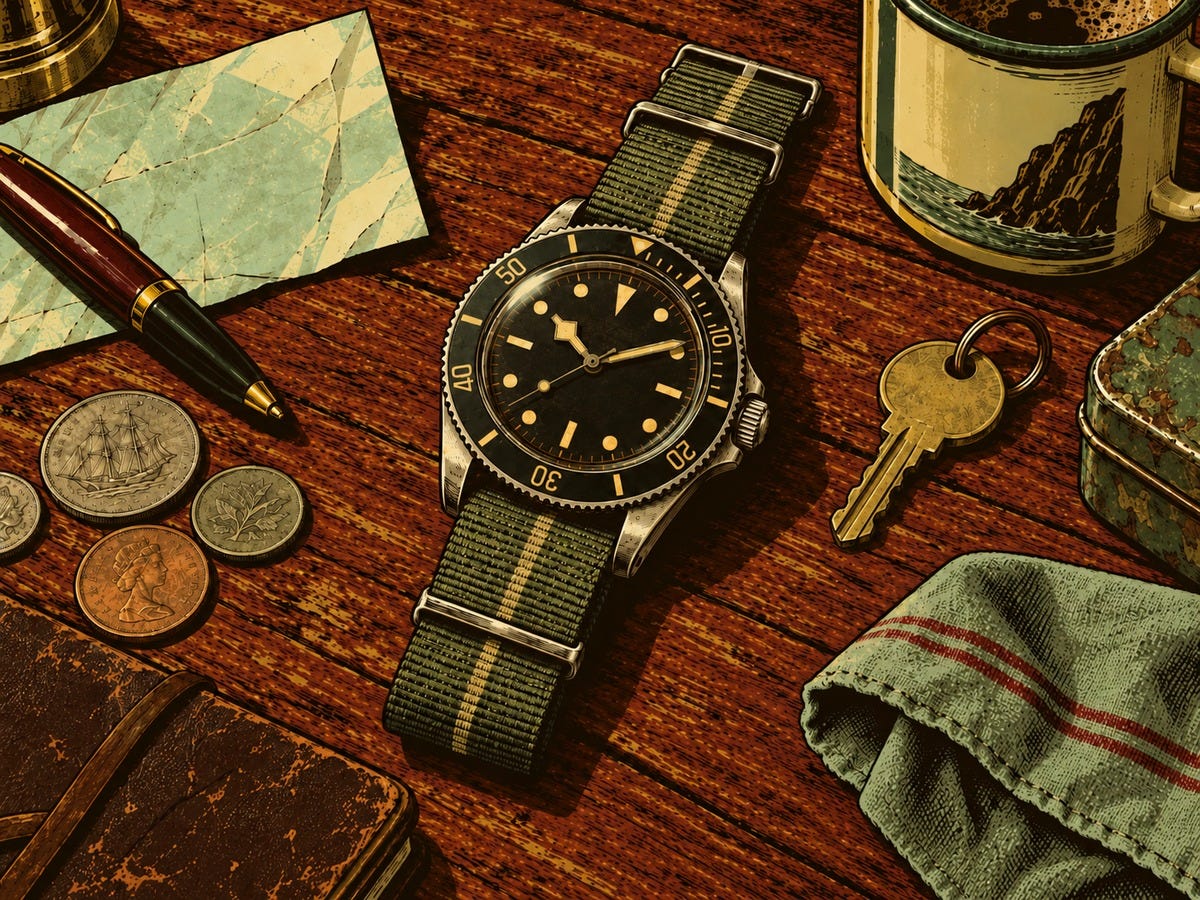
These watches were created under the brand name Tudor, and like their more expensive Rolex counterparts, they were well-built and highly functional.
In the early days, Tudor formed a partnership with the French Navy to produce watches that could be worn in the field and used as functional watches for diving.
Watches from this period with use cases like this have come to be known as tool watches. When these tool watches were first introduced to the world, they cost less than $100.
Many of these old tool watches are still kicking around today.
There’s just one small difference.
Suppose that in 1962 you wanted to buy a Tudor Submariner 7928 (the exact model), it would have cost you $83.95 (USD) before tax. That exact same model today, would cost you close to $20,000.
If you somehow managed to buy this model today, you likely would not use it as the tool it was designed to be.
What was once a tool, has now effectively become a treasure.
**
I recently finished reading a new biography of arguably the greatest baseball pitcher of all time, Nolan Ryan. Of the many outstanding things about Nolan, his longevity is probably top of the list.
As you might imagine, toward the end of Nolan’s career, he was paid a lot of money.
I got curious about this and so I asked ChatGPT to calculate the value of Nolan’s arm over time, based on how much he was paid. Here’s what it came back with:
In 1972, when he played for the LA Angels, he was making $95 per inning.
In 1992, when he played for the Texas Rangers, he was making $26,700 per inning.
His arm didn’t change.
Based on his workload in 1972 — when he was getting paid $95 per inning — you could easily argue that Nolan Ryan’s arm was a tool. A very effective one. A strikeout machine.
Over time, this tool grew exponentially in value and was, ironically, used far less.
You could even say that his arm went from being a tool in 1972, to becoming one of the most treasured things on his team in 1992.
**
There’s a line from Nolan’s biography, that I haven’t stopped thinking about.
The context around this line is that Nolan doesn’t quite like the fact that modern pitchers don’t get the chance to pitch as much as old pitchers (like him) did.
The following line is not Nolan’s, it’s Tim Brown’s (the biography’s author):
“Innings are limited to protect the arms, which seems wise. Then the arms are limited as a result, because they never saw the innings.”
Since reading this, I have come to interpret this line in the following way:
If something was once a tool and is now a treasure, it seems wise to keep it safe. The irony is that by treating a tool as a treasure, it becomes a less valuable tool.
Tool or treasure is a choice we get to make.
Very, very interesting.